
Aboriginal rights
Despite an overwhelming 'Yes' result in the Referendum, the everyday lives of Aboriginal people remained the same.
The referendum did not:
- - grant any extra legal or political rights.
- - cover land rights.
- - lessen discrimination.
- - improve health, housing or education services.
The Referendum removed the discriminatory words and limitations to Aboriginal people in the Constitution, but the Commonwealth continued to leave the running of Aboriginal affairs largely to the government in each state.
In some states, Aboriginal people still could not travel from place to place, control their own money, drink alcohol or marry without permission.
"The overwhelming ‘Yes’ vote sent a clear message that Australian people were supportive of change for Indigenous Australians but nothing in our daily life changed. We were still governed by the Western Australian Native Welfare Act but the ‘Yes’ Vote left us with a sense of hope that things would change."Aboriginal man, living in Corrigin in 1967
The Natives (Citizenship Rights) Act of 1944
In Western Australia, Aboriginal people still had to apply to be an Australian citizen. This was part of the Natives (Citizenship Rights) Act of 1944.
To apply, Aboriginal people had to prove that they had:
- - severed all ties with their Aboriginal family and friends.
- - were free from disease.
- - could speak English.
- - been ‘civilised’ in behavior for two years.
- - could manage their affairs.
- - were industrious in their habits.
"Before 1967 you had to apply for citizenship rights. They’d check up with the police what kind of person you were, then write you a letter saying if you got it or not. My Dad applied but they refused because he was known to have a drink and he lived in a camp."Pat Kopusar, Yes Aborigines do count! Wangka Maya, Pilbara Aboriginal Language Centre, May 1992.
If an Aboriginal person was successful, citizenship did not automatically extend to their children. Their children had to apply under the same rules once they became adults.
A person could have their citizenship taken away if:
- - they were seen to have rejected ‘civilised’ life.
- - been convicted twice of any felony.
- - found drunk.
- - had contracted leprosy, syphilis, granuloma or yaws.
Anyone could make a complaint to the court to revoke someone’s citizenship.
This inhumane treatment meant that many people referred to Citizenship Certificates as dog tags or dog licenses.
Many Aboriginal people in Western Australia had thought the 1967 Referendum would automatically repeal this Act. However this did not happen until 1971.
Towards reconciliation and equality
"The best intentions have not achieved change. For many of us, Constitutional recognition is the priority area, with increasing acceptance of the notion that a treaty or treaties is unfinished business, whose time is coming. But in every area of life for our people, inequality persists. Much more needs to be done." Senator Patrick Dodson, 2017
It has taken time for real change to happen and there is still a long way to go. Aboriginal people continue to suffer disadvantage in life expectancy, child mortality, education and employment. Aboriginal communities are still fighting for recognition as First Peoples in the Australian Constitution. Campaigns such as Close the Gap and Recognise are leading the way for next steps in these areas.
New approaches to reconcilliation have been explored in recent projects by major institutions including the Western Australian Museum, National Museum of Australia and British Museum. These institutions are actively working to reconnect collection objects with their communities.
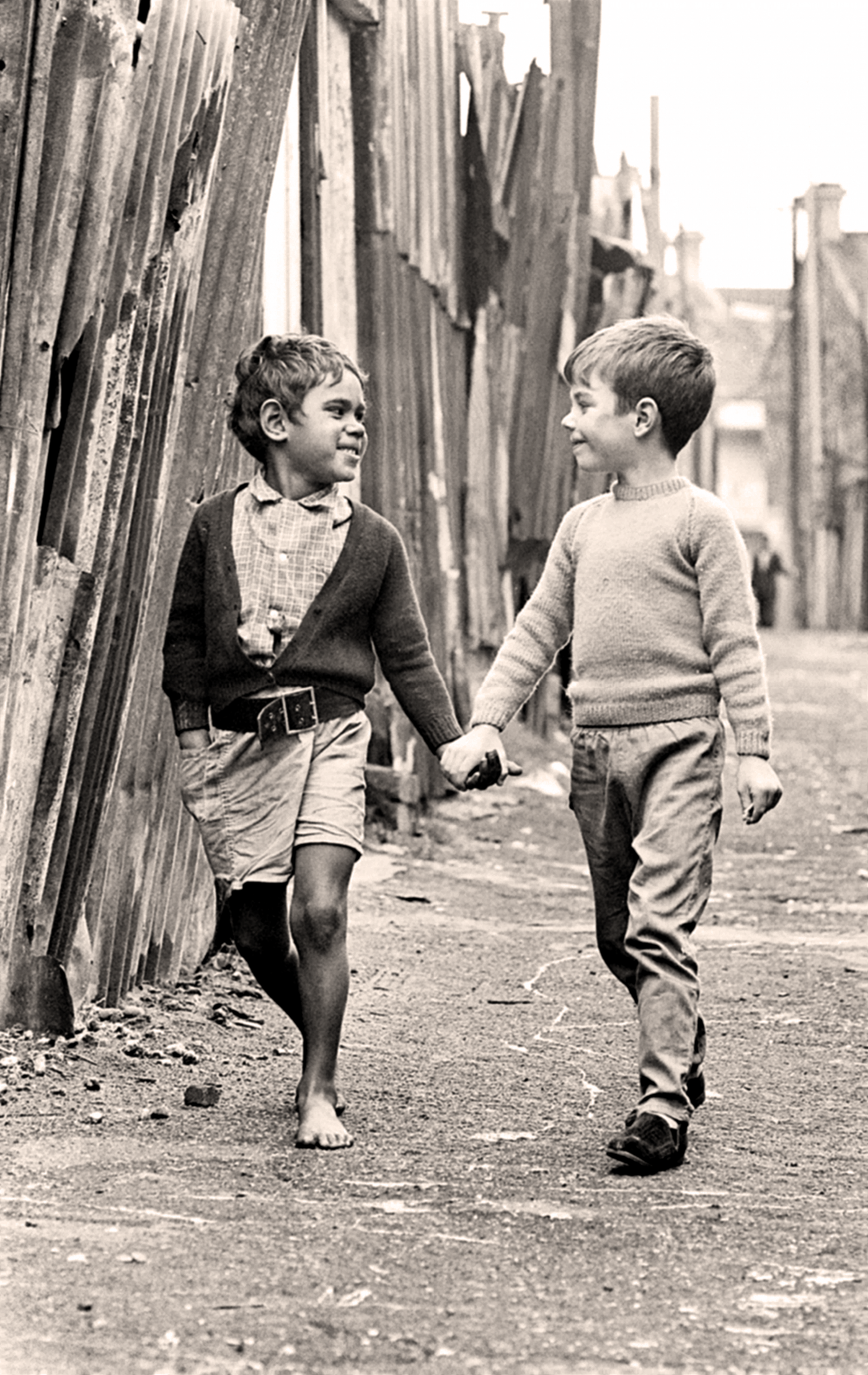
Image Courtesy Fairfax
In Western Australia there has been significant moments of progress over the last 20 years for Aboriginal rights and equality.
In 1997, WA became the first state to issue a parliamentary apology to Aboriginal people who were taken away from their families from 1900 to the 1970s.
In 2015, the state constitution was changed to officially recognise Aboriginal people as the First People of Western Australia and the traditional custodians of the land.
On the 50th anniversary of the 1967 Referendum, we reflect on the past and look to the future. The legacy may not yet be realised but it opened the doorway for change, moving towards reconcilliation, we continue to build on the humanity and spirit of the individuals who shone a spotlight on discrimination and inspired so many Australians to write 'Yes'.