Trial wreck

A British East Indiaman of approximately 500 tons, under the command of John Brooke wrecked on the Tryal Rocks off the north-west coast of Western Australia in 1622. It is Australia's oldest known shipwreck. Departed Plymouth on maiden voyage for Batavia (now Jakarta). Stopped at Cape Town learned of new Brouwer route to the Indies. On the night of 25 May 1622 with 143 on board struck the reef now reef named Tryal Rocks. Brooke, son John and nine others boarded a skiff and Thomas Bright and 35 others a longboat, sailing for Batavia separately. 93 sailors were lost and one died in the skiff. Brookes subsequently falsified his position, resulting in great confusion as to the exact position of the reef. After examining the records and Bright's letter countering Brookes falsehoods in 1934 historian Ida Lee proved that what was then known as Ritchie’s Reef was the site and the reef renamed. In 1969 the wreck was located after researchers John MacPherson and Eric Christiansen of the Fremantle-based Underwater Explorer's Club determined the position after examining Lee's research and the contemporary records. Members of the team to locate the site were Christiansen (leader), Naiom Haimson, Dave Nelley and Ellis Alfred (Alan) Robinson. Chris Muhlmann was skipper. Shortly after the discovery, Robinson attempted an illegal salvage operation through the use of explosives and badly damaged the wreck site. Sponsored by M.G. Kailis of Gulf Fisheries, led by Jeremy Green divers from the Western Australian Museum followed up on an earlier Museum expedition under Harry Bingham and in 1971 conducted a detailed examination of the wreck site. While six cannon, and up to eight anchors of a type expected from the period and some small objects were recorded, no artefacts were found that allowed a positive identification of the site. As a result, Green concluded that the wreck was most likely the Tryall. The Museum's display in the Shipwreck Galleries at Fremantle houses a small number recovered items including a large iron cannon that was recovered on a later Museum expedition under Green’s leadership.

  • Country Built UK

  • Engine N

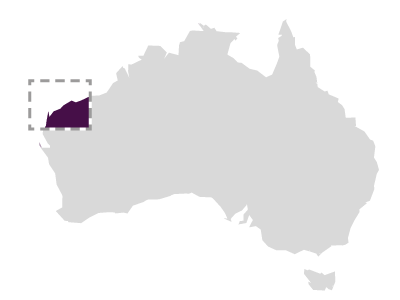
    Map of Trial
  • When Lost 1622/05/24

  • Where Lost Trial Rocks

  • Sunk Code Wrecked and sunk

  • Port From Plymouth

  • Port To Batavia

Museum Reference

  • wreck Trial

  • Protected Protected Federal

  • Found Y

  • Inspected Y

  • File Number 830/72, 439.71

  • Chart Number AUS 747

  • Confidential NO

Artefact information

Full information about the Trial
wreck Trial
When Lost 1622/05/24
Protected Protected Federal
Found Y
Inspected Y
Date Inspected 1996/10 JNG
Where Lost Trial Rocks
Latitude Max -20.285983
Longitude Max 115.375233
Position Information GPS
Engine N
Country Built UK
Port Registered Plymouth
Deaths 93
Crew 139
Sunk Code Wrecked and sunk
Port From Plymouth
Port To Batavia
Cargo General
Master John Brookes
Owner English East India Company
File Number 830/72, 439.71
Chart Number AUS 747
Comments A British East Indiaman of approximately 500 tons, under the command of John Brooke wrecked on the Tryal Rocks off the north-west coast of Western Australia in 1622. It is Australia's oldest known shipwreck. Departed Plymouth on maiden voyage for Batavia (now Jakarta). Stopped at Cape Town learned of new Brouwer route to the Indies. On the night of 25 May 1622 with 143 on board struck the reef now reef named Tryal Rocks. Brooke, son John and nine others boarded a skiff and Thomas Bright and 35 others a longboat, sailing for Batavia separately. 93 sailors were lost and one died in the skiff. Brookes subsequently falsified his position, resulting in great confusion as to the exact position of the reef. After examining the records and Bright's letter countering Brookes falsehoods in 1934 historian Ida Lee proved that what was then known as Ritchie’s Reef was the site and the reef renamed. In 1969 the wreck was located after researchers John MacPherson and Eric Christiansen of the Fremantle-based Underwater Explorer's Club determined the position after examining Lee's research and the contemporary records. Members of the team to locate the site were Christiansen (leader), Naiom Haimson, Dave Nelley and Ellis Alfred (Alan) Robinson. Chris Muhlmann was skipper. Shortly after the discovery, Robinson attempted an illegal salvage operation through the use of explosives and badly damaged the wreck site. Sponsored by M.G. Kailis of Gulf Fisheries, led by Jeremy Green divers from the Western Australian Museum followed up on an earlier Museum expedition under Harry Bingham and in 1971 conducted a detailed examination of the wreck site. While six cannon, and up to eight anchors of a type expected from the period and some small objects were recorded, no artefacts were found that allowed a positive identification of the site. As a result, Green concluded that the wreck was most likely the Tryall. The Museum's display in the Shipwreck Galleries at Fremantle houses a small number recovered items including a large iron cannon that was recovered on a later Museum expedition under Green’s leadership.
Sources Green, J. N., 1986, The Survey and Identification of the English East India Company ship, Trial (1622),IJNA, 15(3): 195-202 J. Green, Australia's Oldest Wreck: The loss of the Trial, 1622, British Archaelogical Reports (oxfors, 1977) I.Lee Marriot, 'The first Sighting of Australia by the English', Royal Australian Historical Society Journal And Proceedings 20:5 (1934), pp. 273-80
Confidential NO
URL http://www.museum.wa.gov.au/maritime-archaeology-db/wrecks/trial